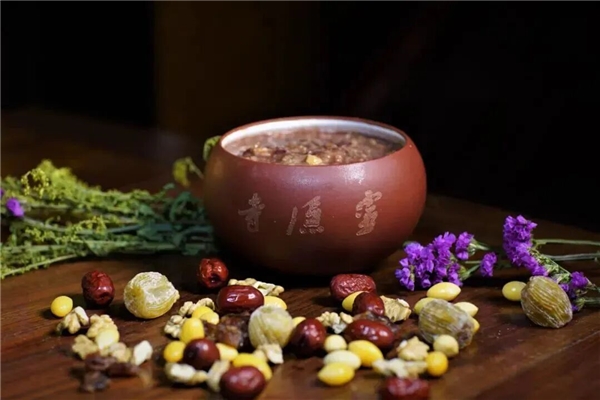
The eighth day of the twelfth lunar month each year is the traditional Laba Festival in China, as well as the day commemorating Shakyamuni Buddha’s attainment of enlightenment. On this day every year, the Buddhist Community in China holds Dharma ceremonies and cook congee with five grains and various dried fruits to offer to the Buddha and distribute it to the people living around Buddhist temples.
The Lingyin Laba Festival customs refer to a series of festive activities held at Lingyin Temple during the Laba Festival period, including offering sacrifices to the Buddha, delivering Buddhist chanting, and cooking and distributing Laba congee. Inheriting the legacy of the Laba sacrificial customs of the Zhou and Qin dynasties and pioneering the Laba Festival customs in the Jiangnan region during the Tang and Song dynasties, these customs integrate religious beliefs with secular concepts. As an outstanding representative of China’s Laba Festival customs, the Lingyin Laba Festival customs have been successively inscribed on the Sixth Batch of Hangzhou Intangible Cultural Heritage List, the Fifth Batch of Zhejiang Provincial Intangible Cultural Heritage List, and in 2021, on the Fifth Batch of the National List of Representative Intangible Cultural Heritage Items, garnering extensive attention from all sectors of society.
The quiet dedication of the general public has made every bowl of Laba congee a fruit of collective karmic affinities. A bowl of congee is more than just food; it embodies a culture and a belief. When devotees taste this bowl of Laba congee, they savor the soft, glutinous sweetness on their tongues and feel warmth and gratitude in their hearts.
