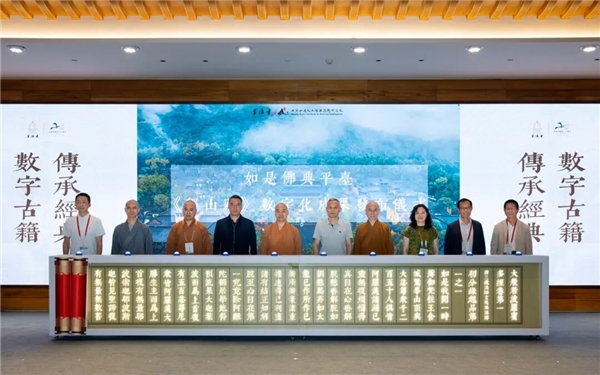
From May 30 to 31, 2026, Lingyin Temple in Hangzhou hosted the Symposium on Tripiṭaka Digitization—a special seminar on Buddhist text digitization marking the temple’s 1700th founding anniversary, held in conjunction with the 3rd Seminar of the International Newsletter for Research on Chinese Buddhist Tripiṭaka.
Over 60 distinguished scholars from China and abroad gathered for in-depth discussions on topics including the digitization and database construction of the Chinese Buddhist Tripiṭaka, preservation of Buddhist textual resources, research on Buddhist literature, and AI-assisted Tripiṭaka studies. Their shared goal is to advance the research, conservation, collation, and digital development of the Chinese Buddhist Tripiṭaka
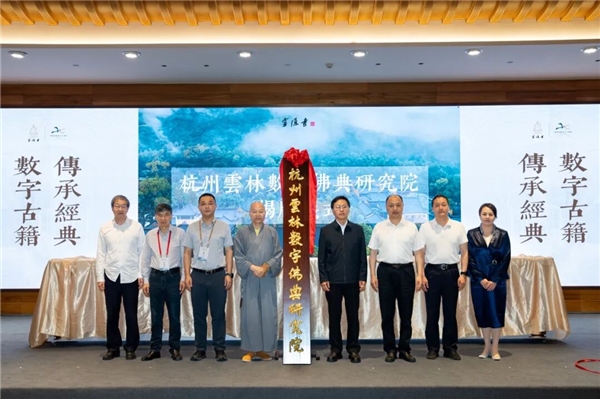
At the opening ceremony, the Hangzhou Yunlin Digital Buddhist Text Research Institute was officially inaugurated. Dedicated to the digital preservation and utilization of Buddhist scriptures, the Institute brings together resources from religious, academic, and technological circles to promote digital collation, scholarly research, public dissemination, and international exchange and cooperation concerning Buddhist canonical works.
At the opening ceremony, the Hangzhou Yunlin Digital Buddhist Text Research Institute was officially inaugurated. Dedicated to the digital preservation and utilization of Buddhist scriptures, the Institute brings together resources from religious, academic, and technological circles to promote digital collation, scholarly research, public dissemination, and international exchange and cooperation concerning Buddhist canonical works.
During the conference, scholars held dedicated sessions on Buddhist text databases, as well as breakout panels covering Tripiṭaka digitization technologies and practical experience, Tripiṭaka editions, the Fangshan Stone Sutras, Ming and Qing dynasty canon collections, and Buddhist philology. Drawing on their respective fields of expertise, the specialists shared cutting-edge findings and practical insights, offering fresh perspectives and directions for advancing the digital development and academic study of Buddhist texts.
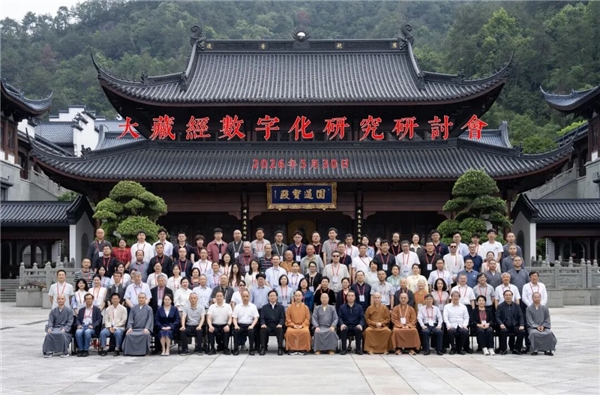
The success of this symposium further deepened collaboration and exchange among religious, academic, and technological sectors, building consensus and rallying momentum for the continued progress of Chinese Buddhist Tripiṭaka digitization. Timed to coincide with Lingyin Temple’s 1700th founding anniversary, the event not only provided a comprehensive showcase of digital achievements in Chinese Buddhist texts, but also injected new vitality into the creative transformation and innovative development of Buddhist culture in the new era.
