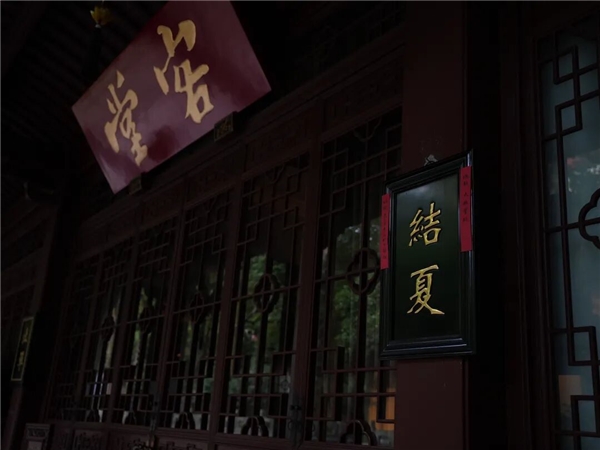
On the morning of June 1 (the 16th day of the fourth lunar month), Lingyin Temple in Hangzhou, abiding strictly by Buddhist monastic regulations, held a solemn summer retreat ceremony in the Mahavira Hall, formally commencing the summer retreat for the Bingwu year.
During the retreat period, the Buddhist masters of Lingyin Temple will recite and uphold the Avatamsaka Sutra daily, praying for the blessings of the Three Jewels, the protection of celestial beings, freedom from external hindrances and inner afflictions over the ninety-day retreat, the elimination of all karmic transgressions, and the growth of all virtuous roots.
In ancient India, the rainy season lasted three months, during which plants grew luxuriantly and insects and ants multiplied in great numbers. Fearing that stepping outdoors might accidentally harm living beings and invite worldly criticism, the Buddha established a retreat period from the 15th day of the fourth lunar month to the 15th day of the seventh lunar month. During this time, monastics are to remain within a single dwelling, refraining from traveling afar, and devote themselves to diligent cultivation—a practice known as the summer retreat.
Also called the “An Ju Ce Xiu” (retreat for encouraged cultivation), the summer retreat is explained by the Vinaya Master Master Yuanzhao in his Zi Chi Ji (Records of Supporting and Upholding the Vinaya): “An (peace/settlement) means calming the body and mind; Ju (abode) means abiding for a set period; Ce (encouragement) means constant self-exhortation; Xiu (cultivation) means performing virtuous deeds with body, speech and mind.” The first day of the retreat is called “Commencing the Retreat,” and its concluding day is called “Ending the Retreat,” also known as the Monastic Self-Repentance Day. Because the monastics cultivate diligently—purifying their three karmic faculties or attaining enlightenment and sainthood—all Buddhas in the ten directions rejoice. Therefore, the closing day is also called the Buddhas’ Rejoicing Day.
